Best Camera Lens for Real Estate Photography: Space Sell
- 1.
Why Wide Angles Rule the Roost in Real Estate Shots
- 2.
Decoding Focal Lengths: What “mm” Really Means for Your Shots
- 3.
Is a 50mm Lens Good for Real Estate Photography? Let’s Be Real
- 4.
What If 24mm Just Isn’t Enough? When to Go Wider
- 5.
The Underrated Hero: Tilt-Shift Lenses and Architectural Integrity
- 6.
Zoom vs Prime: The Eternal Real Estate Lens Battle
- 7.
Budget Lens vs Pro Glass: Can You Fake It ‘Til You Make It?
- 8.
Don’t Forget the Sensor: Crop vs Full Frame Matters
- 9.
Lighting, Composition, and Why the Lens Isn’t Everything
- 10.
Top Picks That Pros Actually Use (and Where to Find ‘Em)
Table of Contents
best camera lens for real estate photography
Why Wide Angles Rule the Roost in Real Estate Shots
Ever tried cramming a whole living room into a frame with your phone? Yeah, we’ve all been there—backed up against the wall like a confused raccoon in someone’s IKEA showroom. If you’re serious about making spaces look grand, inviting, and *actually* spacious (instead of looking like a shoebox with fancy wallpaper), then you’re gonna need more than just a good eye—you’ll need the best camera lens for real estate photography. Wide-angle lenses, y’all, are the unsung heroes of this game. They don’t just stretch corners—they stretch possibilities. From tight hallways to sun-drenched lofts, a wide lens bends reality just enough to make a 600-square-foot studio feel like a downtown loft in Williamsburg… or at least kinda.
Decoding Focal Lengths: What “mm” Really Means for Your Shots
Alright, let’s get nerdy for a sec—but not, like, spreadsheet-nerdy. Focal length is measured in millimeters (mm), and in real estate, you’re usually hovering between 10mm and 24mm on a full-frame camera. Why? ‘Cause anything tighter than that—say, a 50mm—feels like you’re photographing a room from the next zip code. And anything wider? Sure, you *could* go 8mm, but then your couch’ll look like it’s floating into orbit. The sweet spot? Generally, 16–24mm gives you enough width to capture the full room without turning door frames into bananas. Remember: the best camera lens for real estate photography isn’t the one with the biggest number—it’s the one that tells the truth, just… prettier.
Is a 50mm Lens Good for Real Estate Photography? Let’s Be Real
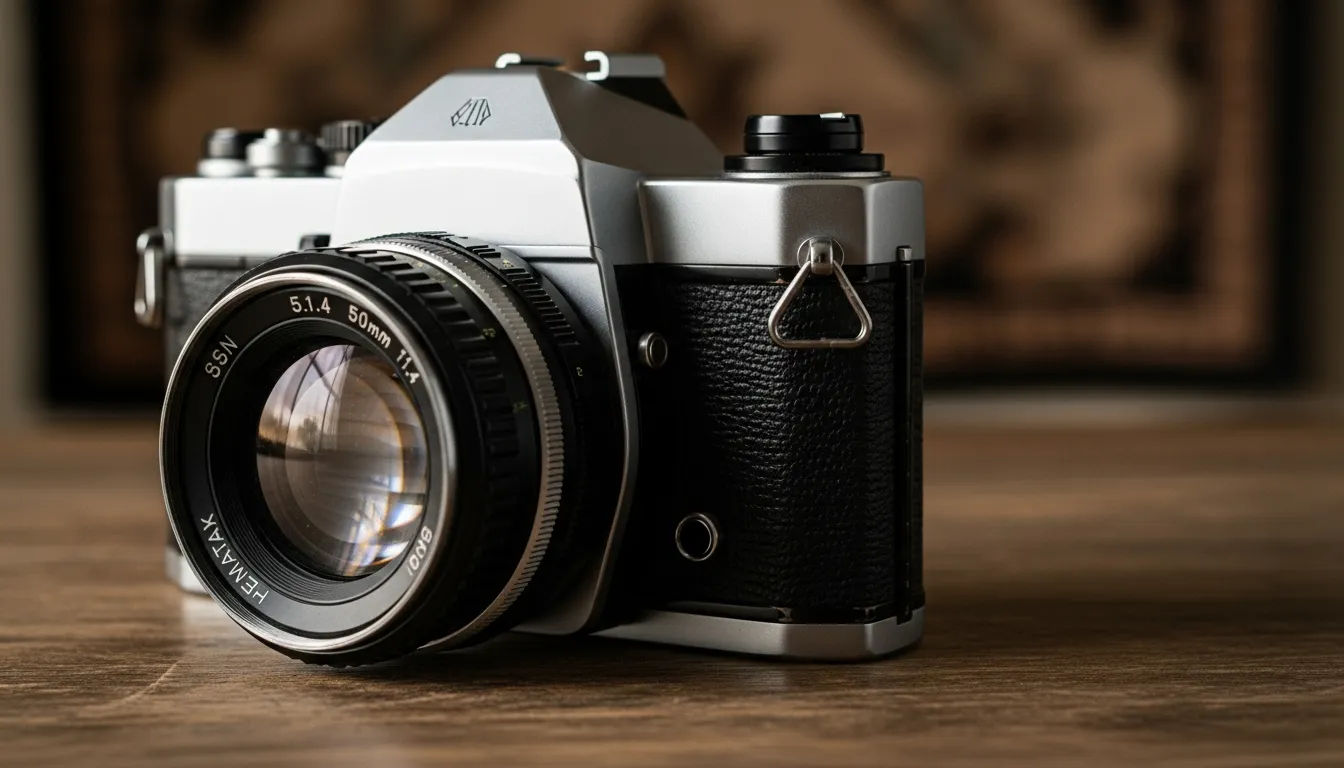
Honestly? A 50mm lens is like bringing a knife to a drone fight. It’s a classic. It’s crisp. It’s fantastic for portraits of your golden retriever in a sunbeam—but for interiors? Nah. Unless you’re shooting a mansion the size of Texas, you’re gonna spend more time backing up than a Roomba on overdrive. That said, a 50mm *can* shine for detail shots: think marble countertops, fancy light fixtures, or that ridiculously expensive faucet that probably dispenses artisanal water. But as your go-to for full-room coverage? Hard pass. If you're hunting the best camera lens for real estate photography, leave the nifty fifty in the bag… for now.
What If 24mm Just Isn’t Enough? When to Go Wider
Here’s the tea: 24mm is often enough… if your listing is a modern, open-concept space with vaulted ceilings and natural light pouring in like liquid gold. But if you’re dealing with a 1920s Brooklyn walk-up or a closet pretending to be a bedroom? You might wanna flirt with something wider—say, 16mm or even 14mm. That extra width doesn’t just *fit* more—it makes cramped quarters feel breathable. Of course, go too wide and you risk distortion that makes your client’s kitchen look like it’s tilting into Narnia. So yeah, 24mm? Solid baseline. But flexibility is key when you’re chasing the best camera lens for real estate photography.
The Underrated Hero: Tilt-Shift Lenses and Architectural Integrity
Now hold up—before you max out your credit card on another ultra-wide prime, lemme whisper three syllables in your ear: tilt-shift. These funky, pricey lenses let you correct perspective distortion *in-camera*, so your vertical lines stay, well, vertical. No more “leaning building” syndrome where the fridge looks like it’s about to slide into the neighbor’s yard. Real estate agents love this stuff ‘cause it means fewer hours in Lightroom wrestling with “Upright” sliders. Is a tilt-shift essential? Not always. But if you’re shooting luxury listings or historic homes where symmetry = prestige, then yeah—it’s worth a peek. And honestly, the results? Chef’s kiss. Nothing says best camera lens for real estate photography like straight lines and silent client approval.
Zoom vs Prime: The Eternal Real Estate Lens Battle
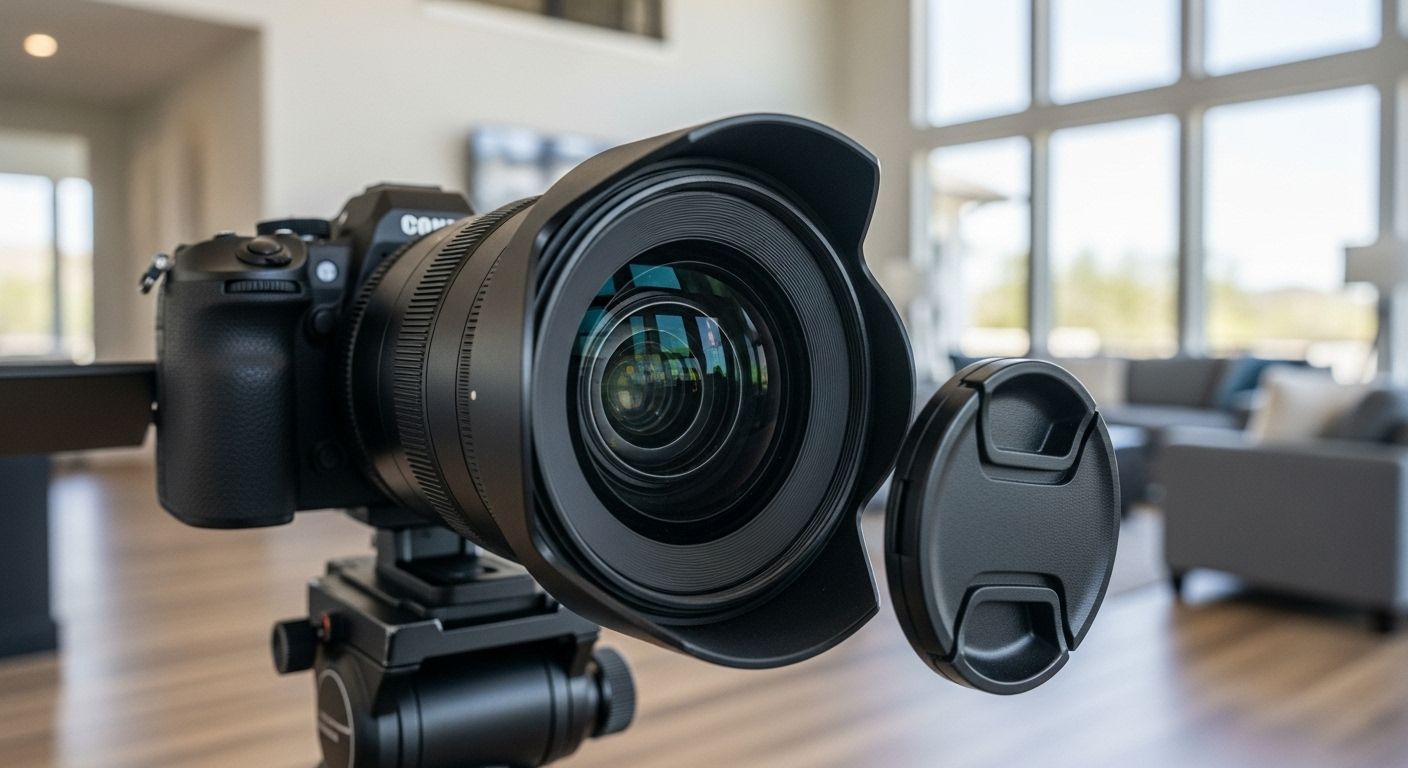
Zooms offer flexibility—swap from 16mm to 24mm without moving your feet (great when you’re balancing on a step stool in someone’s bathroom). Primes? Razor-sharp, faster apertures, and lighter in your bag. But here’s the kicker: real estate photography usually shoots at f/8 to f/11 for deep depth of field, so that “fast” f/1.4 aperture on your prime? Kinda useless here. Plus, who’s got time to swap lenses mid-shoot when the homeowner’s golden doodle is chewing your tripod leg? That’s why many pros lean toward a reliable wide zoom—like a 16-35mm f/4—as their best camera lens for real estate photography daily driver.
Budget Lens vs Pro Glass: Can You Fake It ‘Til You Make It?
Let’s keep it 100: you don’t need a $2,300 lens to start. There are stellar budget options—like the Tamron 17-28mm f/2.8 or even Canon’s EF-S 10-18mm for crop sensors—that deliver 90% of the quality at half the price. But… and this is a big but… if you’re shooting high-end listings weekly, the sharpness, distortion control, and build quality of pro-grade glass (think Sony 16-35mm GM or Nikon Z 14-24mm S) will save you hours in post and elevate your brand. So ask yourself: are you doing this for side gigs or building a legacy? Your answer dictates whether your best camera lens for real estate photography costs $400 or $2,500.
Don’t Forget the Sensor: Crop vs Full Frame Matters
If you’re rocking a crop-sensor camera (APS-C), remember: your lens’s focal length gets multiplied—usually by 1.5x (Nikon, Sony) or 1.6x (Canon). So a 16mm lens on a crop body acts like a 24mm on full-frame. That means to get true wide-angle coverage, you might need a 10–12mm lens just to hit that 16mm-equivalent sweet spot. Full-frame shooters? Lucky ducks—you get the native field of view as advertised. Either way, know your gear. Because nothing kills a shoot faster than showing up with a “wide” 18mm lens… only to realize it’s really 27mm in disguise. Match your sensor to your ambition, and you’re halfway to nailing the best camera lens for real estate photography.
Lighting, Composition, and Why the Lens Isn’t Everything
Okay, real talk: even the best camera lens for real estate photography won’t save you if your lighting looks like a basement interrogation scene. Natural light is king, but golden hour doesn’t pay your rent—so learn to blend ambient with subtle off-camera flash or video LEDs. And composition? Don’t just stand in the doorway and click. Crouch low. Tilt slightly upward. Use leading lines (hallways, countertops, rug edges) to guide the eye. A lens captures light—but you capture feeling. And feeling sells houses.
Top Picks That Pros Actually Use (and Where to Find ‘Em)
After polling dozens of real estate shooters from Austin to Asheville, these lenses keep popping up: the Sony FE 16-35mm f/4 G, Canon RF 15-30mm f/4.5-6.3 STM, Nikon Z 14-30mm f/4 S, and Sigma 14mm f/1.8 DG HSM Art (for those dramatic detail shots). Rent before you buy—via Valentin Chenaille, your one-stop for gear wisdom. Dive deeper in the Gear section, or compare notes with landscape shooters in our guide to the Ideal Lens for Landscape Photography. Pro tip: used markets like MPB or KEH often have like-new copies with warranties. And always, always test distortion performance—because the best camera lens for real estate photography is the one that makes every square foot feel worth every penny.
Frequently Asked Questions
Is a 50mm lens good for real estate photography?
Generally, no—a 50mm lens is too narrow for interior real estate photography unless you're shooting large, open spaces. It’s better suited for detail shots like fixtures or countertops. For full-room coverage, you’ll want something wider; the best camera lens for real estate photography typically falls between 10–24mm on full-frame systems.
Is 24mm wide enough for real estate?
24mm is often sufficient for modern, spacious properties with open floor plans. However, for tighter urban listings or older homes with smaller rooms, you may need something wider—like 16mm or 14mm—to effectively showcase the space without backing into the neighbor’s yard. So while 24mm works, it’s not always the best camera lens for real estate photography in every scenario.
What mm is best for real estate photography?
The ideal focal length for real estate photography typically ranges from 16mm to 24mm on a full-frame camera. This range offers enough width to capture entire rooms while minimizing extreme distortion. Crop-sensor users should aim for 10–16mm to achieve equivalent field of view. Ultimately, the best camera lens for real estate photography balances width, sharpness, and control.
How wide of a lens do I need for real estate photography?
You’ll generally need a lens that goes as wide as 14–16mm (full-frame equivalent) to handle most residential interiors. Ultra-wide lenses below 12mm can introduce noticeable distortion, while anything above 24mm may fail to capture tight spaces effectively. The goal is to show the room truthfully—but flatteringly—making the best camera lens for real estate photography one that walks that fine line.
References
- https://www.dpreview.com/articles/real-estate-photography-lens-guide
- https://fstoppers.com/real-estate/ultimate-guide-lenses-real-estate-photography-54321
- https://petapixel.com/2023/08/14/choosing-the-right-lens-for-real-estate-photography
- https://cambridgeincolour.com/tutorials/real-estate-photography-tips.htm